
Short videos from COi Rubber Products explaining the ASTM tests that matter for custom molded rubber and plastic parts.
Latest videos

Vicat Is Not a Service Temperature | ASTM D1525 #Shorts
A short explanation of Vicat softening results and why a test value is not a service-temperature limit.

Clear Plastic Turns Hazy After Rubbing? | ASTM D1044 #Shorts
A short explanation of abrasion-related haze in clear plastic and why the test conditions matter.

Plastic Density Reports Disagree? | ASTM D1505 Test Context
An introduction to comparing plastic-density reports with the test method and conditions kept in view.

Plastic Density Reports Disagree? Check the Context | ASTM D1505 #Shorts
A short reminder to keep the method and test context with a plastic-density result.

Same Part, Which Cavity? Keep the Inspection Clue | DAAV #Shorts
Buyer advice on recording the mold cavity with inspection results.

What Does Smooth Mean? Agree the Surface Finish | DAAV #Shorts
Buyer advice on agreeing surface-finish requirements before production.
Why Do Film Tensile Reports Disagree? | ASTM D882 Test Context
An introduction to plastic-film tensile testing using the historical ASTM D882-02 reference, including thickness, specimen preparation, test speed, grips and extension measurement.
Film Tensile Reports Disagree? Check the Conditions | ASTM D882 #Shorts
A short buyer checklist for comparing film tensile reports using thickness, specimen preparation, test speed, grips and extension measurement.
Calibration Sticker? Check the Measurement Chain | DAAV #Shorts
Buyer advice on checking the measured property, range, result, uncertainty and measurement process rather than relying on a calibration sticker alone.
Twenty What? Check the Units Before Ordering | DAAV #Shorts
Buyer advice on keeping drawing, quote and inspection-report units clear and confirming how conversions and acceptance limits are handled.
Plastic Gained Weight in Water? | ASTM D570 Water Absorption #Shorts
A short introduction to ASTM D570 water absorption testing for plastics.
Why Did the Plastic Crack? | ASTM D1693 Stress Cracking #Shorts
A short introduction to ASTM D1693 environmental stress cracking testing for plastics.
ASTM D3574: Is Heavier Foam Always Firmer? | Density, IFD & Compression Set
An introduction to flexible foam testing, keeping density, indentation force deflection and compression set as separate measurements.
Is Heavier Foam Always Firmer? | ASTM D3574 #Shorts
A short explanation of why foam density and firmness describe different properties.
Which Lot Was That? Keep Rubber Batches Traceable | DAAV #Shorts
Buyer advice on linking rubber parts, packaging and inspection records to the correct production lot.
One Defect Photo Is Not Enough | Rubber Quality Reports | DAAV #Shorts
Buyer advice on recording the part, lot, defect location and inspection context when reporting a rubber quality issue.
First Article Inspection: Prove the Rubber Part First | DAAV #Shorts
Buyer advice on agreeing first article inspection requirements before full production.
Which Drawing Revision? Rubber Buyers, Check the Letter | DAAV #Shorts
Buyer advice on naming the drawing revision on the quote request, quote and purchase order.
ASTM D6370: What Is Actually in This Rubber? | TGA Compositional Analysis
An introduction to thermogravimetric analysis of rubber compounds, with organics, carbon black and ash reported as mass fractions.
ASTM D6370: What Is Actually in This Rubber? | TGA #Shorts
An introduction to thermogravimetric analysis of rubber compounds, with organics, carbon black and ash reported as mass fractions.
ASTM D5603: Recycled Vulcanizate Rubber Classification
An introduction to classification of recycled vulcanizate particulate rubber used as a compounding material.
ASTM D2136: Coated Fabrics Low-Temperature Bend Test
An introduction to the pass/fail low-temperature bend test for fabrics coated with rubber or rubber-like materials.
ASTM D3677: Same Look, Same Rubber? | Infrared Identification #Shorts
An introduction to rubber identification by infrared spectrophotometry, with the tested material and method kept with the report.
ASTM D4574: Ash Content of What? | Rubber Compounding Materials #Shorts
An overview of ash-content testing for rubber compounding materials, not a finished-part performance rating.
ASTM D2632: What Does a Rubber Rebound Number Carry? | Vertical Rebound
An introduction to rubber resilience by vertical rebound, with the method, instrument and test conditions kept in view.
ASTM D2632: A Bounce Becomes a Number | Rubber Resilience #Shorts
A short introduction to vertical rebound testing of solid rubber and the limits of a resilience number.
The Date Moved: Rubber Lead Time Questions | DAAV #Shorts
Questions to ask about material, tooling, production, inspection and freight when reviewing a rubber part lead time.
Why So Many Parts? Rubber Order Minimums | DAAV #Shorts
A buyer guide to setup costs, material batches and pilot-run options when reviewing minimum order quantities.
ASTM D5099: Same Rubber, Different Flow? | Capillary Rheometry Explained
An introduction to ASTM D5099 and capillary rheometry for rubber flow testing.
Same Rubber, Different Flow? | ASTM D5099 #Shorts
A short introduction to rubber flow testing with ASTM D5099.
Which Dimension Matters? Rubber Drawing Review | DAAV #Shorts
A short buyer guide to reviewing dimensions on rubber part drawings.
Unknown Is an Answer: Don't Guess the Rubber Spec | DAAV #Shorts
A reminder to identify unknown rubber specifications rather than guess.
ASTM D7723: How Well Is the Filler Mixed? | Rubber Macro Dispersion
A buyer overview of rubber filler macrodispersion: checking how evenly filler is mixed and comparing results with the method and test conditions in view.
That Rubber Quote Is Lower. What Did It Leave Out? | DAAV #Shorts
A buyer checklist for comparing rubber quotes beyond the unit price: confirm what is included, what is excluded and which assumptions differ.
The Parts Arrived. Where Are the Records? | DAAV #Shorts
A buyer reminder to check the records supplied with delivered parts, confirm the required documents and resolve gaps before treating the shipment as complete.
Two Files, Two Answers: Which Drawing Controls? | DAAV #Shorts
A buyer guide to confirming the controlling drawing and revision when files disagree, before quoting, production or approval.
A Forecast Is Not an Order: Rubber Buyer Planning | DAAV #Shorts
A buyer guide to labeling forecasts, releases and firm orders, separating annual usage from release quantities, and confirming dates and quote assumptions.
ASTM D2084: Know the Cure, Then Compare | Oscillating Disk Cure Meter
A buyer overview of ASTM D2084 cure testing: comparing compounds, checking test conditions, and understanding the limits of cure results.
ASTM D3137: Rubber in High Humidity | Hydrolytic Stability Explained
A buyer overview of ASTM D3137 and hydrolytic stability testing of rubber in high humidity.
Before Saying Approved: Rubber Sample Review | DAAV #Shorts
Questions to review before approving a custom rubber sample: purpose, drawing and material references, review checks and open items.
ASTM D3183: Before Rubber Testing, Check the Preparation
ASTM D3183-10(2024) explains preparation of pieces from non-sheet rubber vulcanizates when test specimens cannot be cut directly from the product. Preparation is not a finished-part performance rating.
ASTM D926: Higher Plasticity, Less Flow? | Unvulcanized Rubber Explained
A buyer overview of plasticity and recovery testing for unvulcanized rubber. Check the method and test conditions before comparing results.
Before the Box Closes: Rubber Packaging & Labels | DAAV #Shorts
Agree on packaging quantities, label fields and receiving requirements before a custom rubber shipment leaves.
What Does a Rubber Tooling Quote Actually Include?
Compare process, cavities, samples, maintenance and transfer scope before approving custom rubber tooling.
ASTM D6601: Rubber After-Cure Dynamic Properties | Beyond the Cure Result
How ASTM D6601 measures after-cure dynamic properties, why test conditions matter, and when specimen slip can make results unreliable.
ASTM D6746: Green Strength Before Rubber Cures | Test Conditions Matter
An introduction to green-strength testing of raw rubber and uncured compounds, and why specimen preparation, extension rate and temperature matter when comparing results.

ASTM D5289: Rubber Cure Data Needs Context | Rotorless Cure Meters
An introduction to comparing rubber cure data with the test conditions in view.

Changing Rubber Suppliers? Compare the Plan, Not Just Price | DAAV #Shorts
A planning checklist for reviewing a rubber supplier change beyond the unit price.

ASTM D6048: Rubber Stress Relaxation | Compare With Context #Shorts
A short introduction to comparing rubber stress-relaxation results in context.

ASTM D4482: Rubber Extension Cycling Fatigue Explained
An introduction to rubber extension cycling fatigue testing.

Choosing a Rubber Material? Start With the Job | DAAV #Shorts
Buyer advice on starting material selection with the application.

ASTM D575: Rubber Compression Stiffness Explained
How compression-deflection testing helps compare the stiffness of rubber materials.

ASTM D5963 Rubber Abrasion Testing
How controlled abrasion testing helps compare rubber wear.

A spec without a method is an opinion | DAAV #Shorts
Buyer advice on naming the test method behind a specification.

ASTM D1149 Ozone Cracking Test: What Rubber Buyers Should Know
An explainer on ozone cracking tests for rubber buyers.

The tolerance you don't write is the tolerance you get | DAAV #Shorts
Buyer advice on writing tolerances into a rubber-part RFQ.
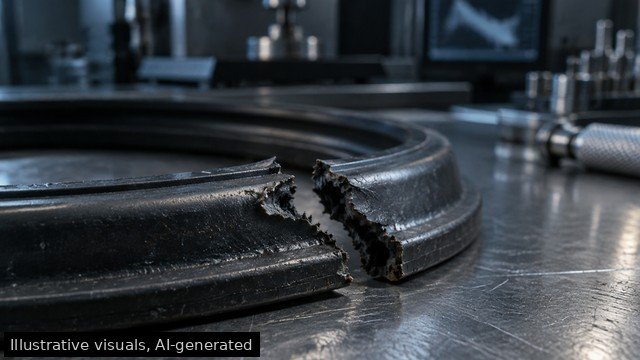
ASTM D624: Does a Nick Decide If Your Part Survives?
What ASTM D624 tear strength measures, why a hard pull can still tear once a nick exists, and why your RFQ should name the tear test and its target.

Skip the helicopter. Build something real. | DAAV #Shorts
An honest offer for independent sales reps: bring the buyer relationships, COi handles the quoting, manufacturing and fulfillment. Commission-based.

Your rubber part quote is only as good as your RFQ | DAAV #Shorts
Why a rubber part quote is only as good as the RFQ behind it, and the details that make an RFQ quotable.

ASTM D1414: Will Your O-Ring Hold?
What ASTM D1414 tests on rubber O-rings – physical properties, quality control, and how aging changes the numbers, so suppliers can be compared on the same basis.

ASTM D792: Is It the Same Plastic? (Density & Specific Gravity)
What density and specific-gravity testing tells you when comparing plastic parts or batches, and what to specify when requesting it.

ASTM D1238: What Does Melt Flow Rate Tell You?
What melt flow rate measures, how to read it, and why test conditions must match to compare plastics.

ASTM D638 Plastic Tensile Test, Explained
What D638 measures, why test conditions matter, and why a result is not a service-life guarantee.

ASTM D2240: What Does Durometer Hardness Tell You? (Shore A vs Shore D)
Shore A versus Shore D, and how a durometer measures the indentation hardness of rubber.

Demystifying ASTM D429: Rubber Adhesion Test Methods
How rubber-to-metal adhesion is tested.

ASTM D412: How Strong Is Your Rubber? (Tensile Testing)
Tensile strength and elongation testing of rubber.

ASTM D395 Compression Set
How much a rubber part stays deformed after compression.

ASTM D471: Will Your Rubber Survive Oil? (Liquid Immersion Test)
How oil, fuel and other liquids change rubber’s mass, volume, hardness and tensile properties.

Understanding ASTM D573: Rubber Deterioration Testing
How an air-oven heat-aging test shows changes in rubber tensile strength, elongation and hardness.
Full playlist
ASTM Testing Explained playlist on YouTube | COi Rubber on YouTube
Request a quote
Questions about testing or custom molded rubber parts? Email estimator@coirubber.com or contact our team.