
Medical Manufacturing

Custom molded and extruded rubber and plastic parts for medical manufacturing applications – built to your print, or designed with you.

Rubber and plastic applications in medical devices

COi Rubber manufactures custom molded rubber and plastic components for medical devices, built to customer specifications. We work with your design engineers from the early stages – built to your print, or designed with you from the requirement up.

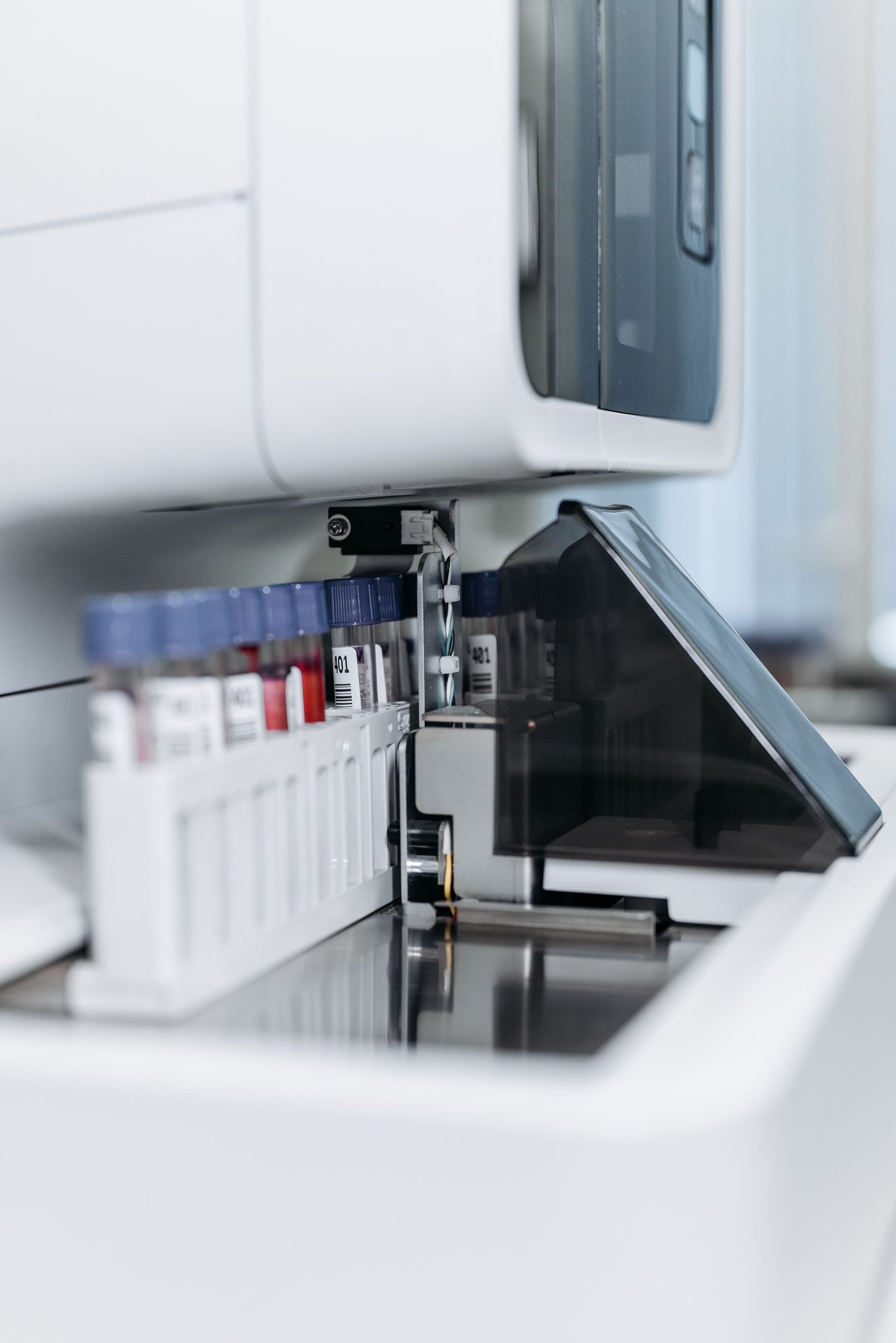
Test tubes in medical equipment (stock photo, illustrative)
Stock photo of laboratory test tubes – an example of the equipment these parts serve, not COi Rubber parts. One photo cannot show every use; the list below covers common applications.

Below are common rubber and plastic applications our customers source in this industry, and the materials we mold for them. These are engineering considerations, not guarantees of suitability – final selection depends on your drawing, operating environment and testing. Send a drawing or a sample part and we will match the compound, durometer and process to the application.

Applications:

  • Seals and gaskets (rubber) – seal device housings, cartridges and fluid paths.
  • Tubing and fluid-path components (rubber) – extruded and molded parts where material choice follows the media and sterilization method.
  • Diaphragms and valves (rubber) – molded elastomer components for pumps and fluid control.
  • Bumpers, feet and cushions (rubber) – protect instruments, carts and enclosures in daily hospital use.
  • Keypads and grips (rubber) – sealed, cleanable interfaces and handles for devices and equipment.
  • Grommets and strain reliefs (rubber) – protect cables and tubing at enclosure entries.
  • Plastic housings and components (plastic) – injection-molded, extruded and insert-molded plastic parts.

Materials:

  • Silicone
  • Ethylene Propylene Diene (EPDM)
  • Polychloroprene (CR)
  • Natural Rubber (NR)
  • Styrene Butadiene (SBR)
  • Fluoroelastomer (FKM) or Viton®
Get a quote for your project:
sales@coirubber.com
Visit us at: coirubber.com

Have a question? Use our contact form to receive information regarding your inquiry. You may also give us a call at (626) 965-9966.

Materials and your RFQ

Medical parts are chosen on material, repeatability and documentation. Tell us whether the part must be latex-free, must be sterilized by steam, gamma or ethylene oxide, or must meet a cleanliness or coating requirement, because that shapes the compound and process choice.

When you request a part, tell us the temperature range, media or chemical exposure, and expected service life, and include the drawing or a sample part. We match the compound and durometer to that.

Design considerations for medical components

The right material depends on how the part will be used and processed. The points below shape material and geometry choices for medical components:

  • Material selection. Material choice follows the media and the use the part will see; tell us at RFQ if the part must be latex-free or meet a specific material standard.
  • Sterilization method. Tell us whether the part must be sterilized by steam, gamma or ethylene oxide, because that limits the compound choice.
  • Fluid-path contact. Tubing, seals and fluid-path components contact different media; the compound follows what runs through or past the part.
  • Cleanability. Keypads, grips and interfaces on devices and equipment need sealed, cleanable surfaces; geometry and compound follow the cleaning method.
  • Repeatability and documentation. Medical parts are chosen on material, repeatability and documentation; tell us at RFQ what your process requires.

These are engineering considerations to review together at the quoting stage, not guarantees of suitability for a specific application.

Molding and extrusion for medical components

We match the process to the part and the volume:

  • Rubber molding – compression, transfer and injection molding for seals, gaskets, diaphragms, keypads and fluid-path components, from prototype quantities through production runs.
  • Plastic molding and extrusion – injection-molded, extruded and insert-molded plastic parts.

Send a drawing or a sample part and we will recommend the process, tooling approach and compound together.

From prototype to production

Every new part goes through first article inspection or a Level 1 PPAP (Production Part Approval Process) before production – Level 3 for automotive, Level 4 for higher-requirement projects. We provide material certifications verified in our own lab against your material requirements, plus a dimensional layout, a bubble blueprint and a signed first article form. Level 3 goes into full industry-standard PPAP documentation depth: design records, process flow, PFMEA, control plan, MSA, capability studies (CPK) and the Part Submission Warrant (PSW). Higher-requirement projects can run customer-defined Level 4 submissions where specified. Our manufacturing facility is IATF 16949 certified, with APQP and 5-Why and fishbone root-cause analysis built into our quality process. Once a part is approved, we hold the compound, durometer and tooling consistent so reorders match the approved part.

What to include in your RFQ

A complete RFQ gets a faster, more accurate quote. Include what you can from this list:

  • Drawing or sample part (2D or 3D files welcome)
  • Prototype and annual quantities
  • Operating environment: media exposure, sterilization method
  • Any required standard or rating (for example a flammability rating)
  • Tolerance and fit requirements, including mating surfaces
  • Target timeline for samples and production

Send these to sales@coirubber.com and we will respond with material and process recommendations.

BBB profile