
The engineering behind low-fog rubber for lighting gaskets, seals and grommets
David Chao · COi Rubber Products · 28 Nov 2026
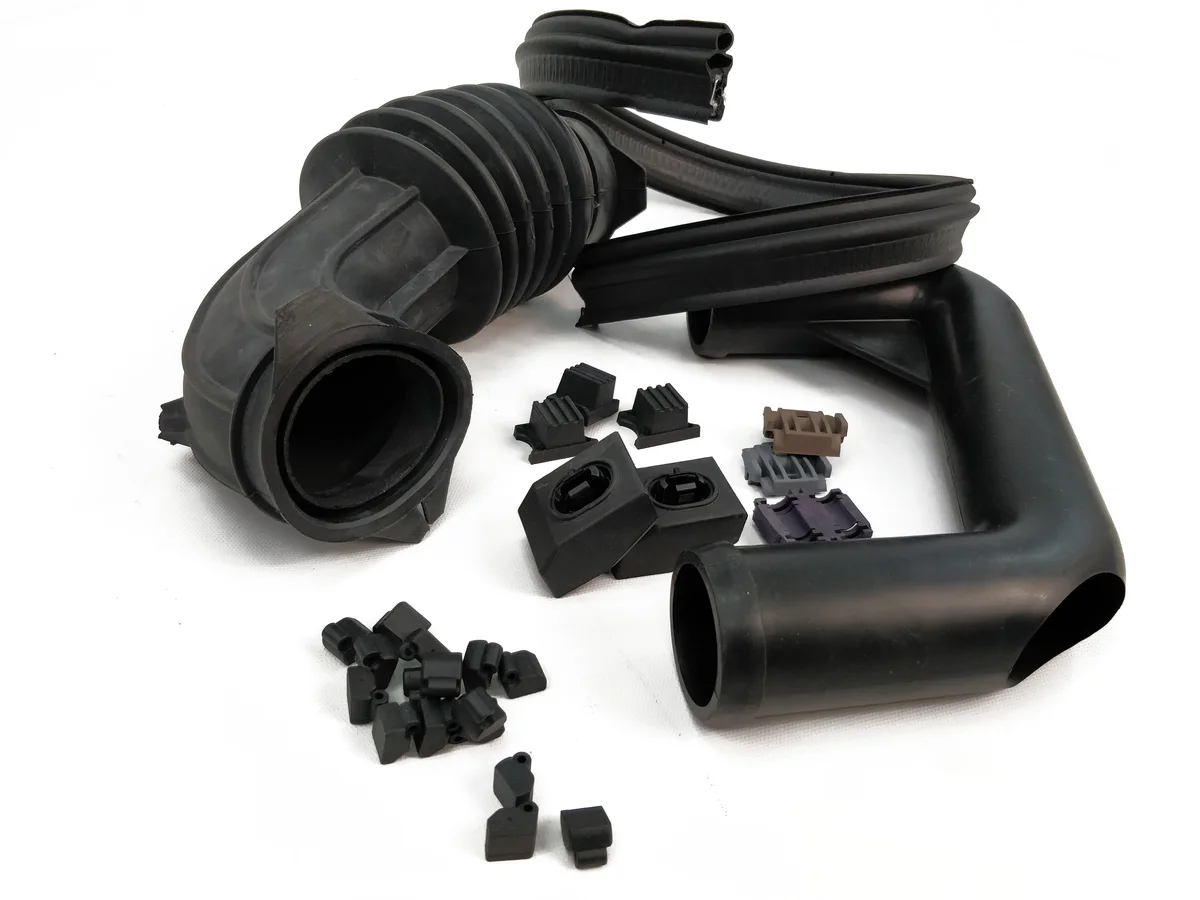
The optical environment is part of the material brief
In a lamp assembly, rubber has two jobs worth separating: keeping the interface sealed and limiting what the material can release into the optical environment. Passing one requirement does not establish the other.
At COi, we have experience with automotive lighting rubber requirements, including lamp gaskets and seals. That experience is why we start with the application, the complete compound and the released test specification, not a generic low-fog label.
From material to optical deposit
Conceptual pathway, not a lamp cross-section, measured result or simulation.
1. Diagnose the deposit before changing the rubber
Outgassing is the release of volatile substances. Material fogging is the deposition of condensable substances on a cooler surface. Bloom is migration or crystallization at the rubber surface. Water condensation is another mechanism again. An optical film does not, by itself, identify which component supplied it. The rubber, lubricants, adhesives, coatings and assembly process belong in the investigation; changing the polymer without identifying the source can miss the problem.
2. Choose a compound, not an acronym
EPDM, silicone and FKM are starting points, not fogging specifications. EPDM may fit a weather-exposed seal application, but its oil, process-aid and cure package still matter. Silicone offers useful flexibility across temperature, yet residual low-molecular-weight siloxanes can migrate or volatilize. FKM can be valuable where heat and chemical exposure govern, but its cure system, post-cure and low-temperature grade must match the design. None of these family names proves optical cleanliness. Select the exact formulation against the mechanical and environmental requirements, then verify its emission and deposit behavior.
3. Cure chemistry changes the question, not the need to test
Sulfur-cured compounds require attention to residual curatives, accelerators and migrating ingredients. Peroxide cure can avoid a sulfur cure package, but residual peroxide and its decomposition products can still contribute to fogging. For silicone, platinum addition cure avoids the reaction by-products associated with peroxide cure; it does not guarantee the absence of low-molecular-weight siloxanes. A sulfur-free request, a non-blooming request and a low-fog requirement are separate controls, not synonyms.
4. The small ingredients can make the large difference
Review the volatility and loading of plasticizers, process oils, processing aids, waxes and stabilizers. Lower-volatility or polymeric alternatives can be development options, but changes can affect processing, hardness and sealing behavior. Carbon black and mineral fillers also belong in the formulation review: grade, impurities, surface treatment and interactions matter. Published low-fog compounding work identifies both additive and filler choices as variables. There is no defensible universal filler recipe or claim that black rubber is inherently low-fog.
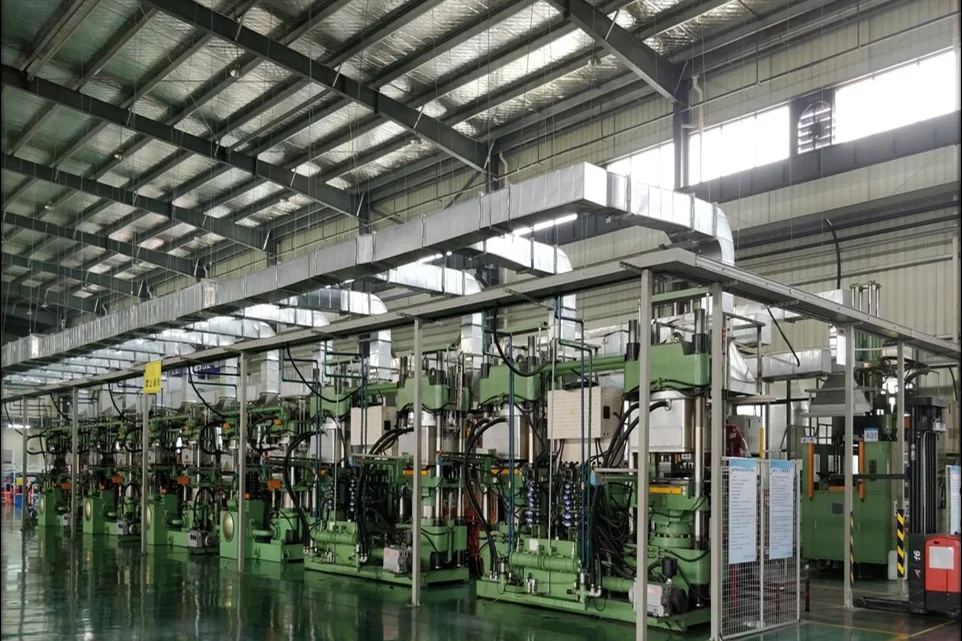
5. Post-cure and cleanliness are part of the supplied material
A controlled post-cure can reduce residual volatiles and stabilize properties, but it is not a universal repair for an unsuitable formulation. Time, temperature, airflow, loading and part geometry need a validated process window. Compare test specimens and production parts in the same supplied condition. Mold-release agents, assembly lubricants and handling or packaging residues should be included in the contamination review. Keep contact materials controlled and investigate the completed assembly, rather than assuming an isolated material result explains every deposit.
6. Match the method to the failure mode
SAE J1756_202604 is the current SAE fogging reference, with optical-deposit and deposited-mass approaches for automotive interior materials. ISO 6452:2021 and DIN 75201:2024-06 are also interior-material fogging references. They do not automatically qualify a headlamp seal. VDA 278 and ISO 12219-11:2025 characterize organic emissions by thermal desorption; VOC and FOG values are analytical endpoints, not interchangeable with optical-film readings. ASTM E595-15(2021) measures total mass loss and collected condensables under vacuum. Its spacecraft-oriented screening conditions must not be passed off as an automotive lamp-life prediction. ASTM D5393-97 is withdrawn, not a current alternative.
The right RFQ asks for evidence, not adjectives
Start with the drawing revision, exact material restrictions, service exposures and sealing function. Then record the specified test method and revision, specimen geometry and preparation, conditioning, exposure time and temperature, measured endpoint and acceptance limit. Ask whether the result applies to a plaque, a finished part or the complete assembly, and whether it represents the actual production cure and post-cure. A useful material review ends with an agreed validation plan. Low-fog performance belongs to a defined compound, process and test condition, not to a polymer name alone.
Start with the application
COi supports custom molded rubber and the review of material, tooling and production requirements. If a lighting gasket, seal or grommet needs a clearer material brief, start with the drawing and the customer's released specification.
COi engineering and material review
General engineering guidance. No COi certification, numerical emission result, passed OEM qualification or universal compound suitability is claimed. The customer's released lamp-specific requirements govern.
Sources and method notes
Standards status checked 28 Nov 2026. Full copyrighted standards are not reproduced. Polymer and process references are general engineering sources, not COi performance data. Published patent examples identify variables for investigation and are not a recommended formula.
- SAE J1756_202604, current edition
- ISO 6452:2021, fogging
- DIN 75201:2024-06, fogging
- VDA 278, May 2016 listing
- ISO 12219-11:2025, emissions analysis
- ASTM E595-15(2021), vacuum outgassing
- ASTM D5393-97, withdrawn 1998
- WACKER, silicone materials and processing guide
- Dow Corning, post-curing silicone elastomers
- Elkem, low-volatiles silicones
- Parker, O-Ring Guide, polymer selection
- Published low-fog rubber formulation work, US20160229998A1 (patent, not a universal recipe)
- COi engineering