
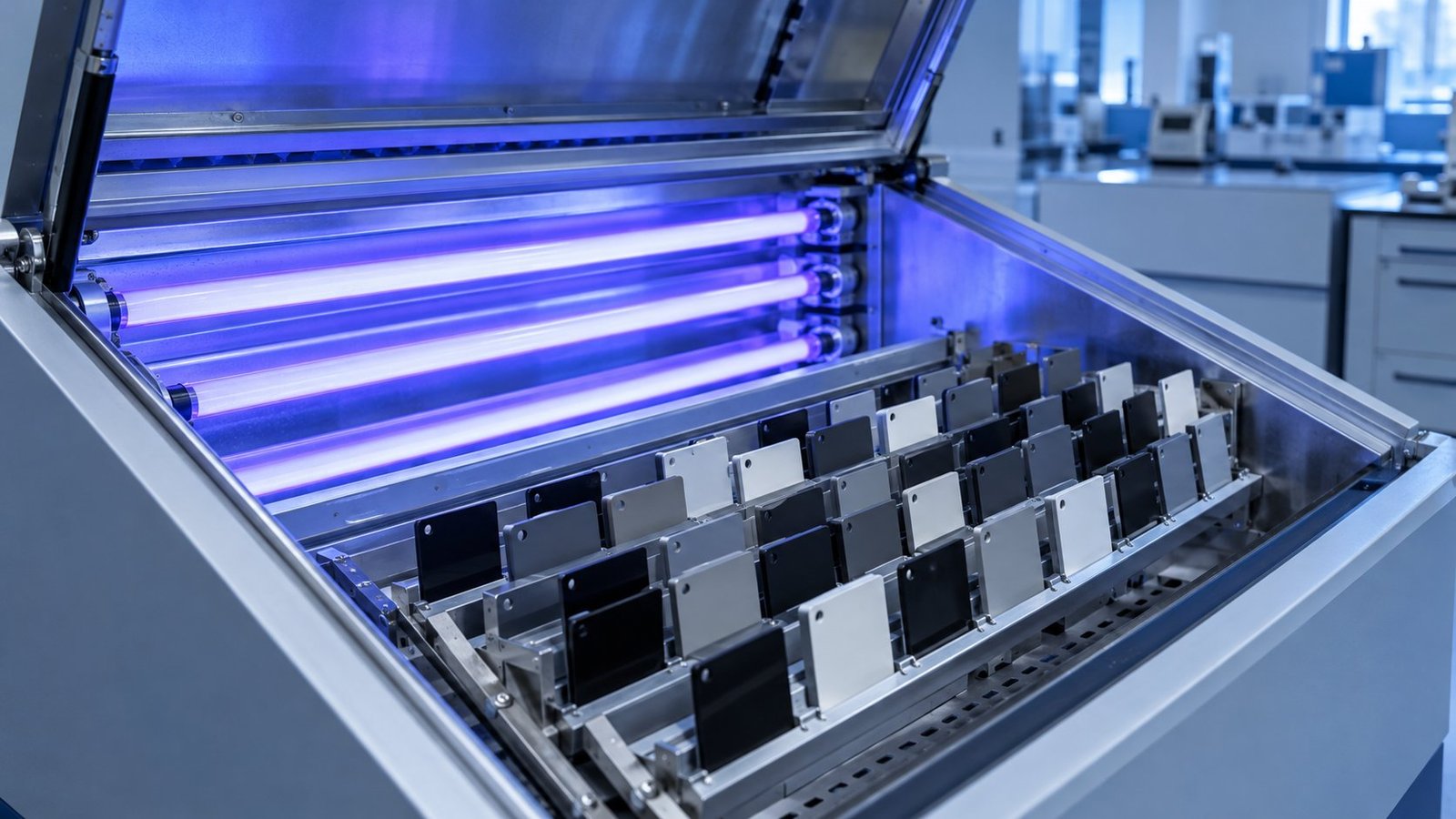
A plastic part can pass every incoming inspection and still fail a year later in the sun. ASTM D4329 is the standard way to find out before that happens: it exposes plastic test samples to cycles of fluorescent UV light and moisture to simulate outdoor weathering. Here is what the test does and how to use the results.
What ASTM D4329 tests
ASTM D4329 covers the fluorescent ultraviolet (UV) and condensation exposure of plastics. Test samples are mounted in a chamber and cycled between UV light and moisture for a set number of hours. After exposure, they are compared against unexposed samples.
- Color and gloss change. How much the surface fades, yellows or dulls.
- Surface damage. Chalking, crazing, cracking and loss of surface texture.
- Property change. How tensile strength, impact strength and elongation hold up compared with unaged samples.
How to read the results
The number of exposure hours is not a direct conversion to years outdoors. Sunlight intensity, humidity and temperature vary by region, so results are best used to compare materials against each other under identical cycles. A compound that keeps its color and strength through a long cycle is the safer choice for outdoor parts; one that chalks or turns brittle early is a warning. Match the exposure cycle to the real service environment as closely as you can.
Why it matters when choosing a compound
- Two materials can look identical on day one and age very differently. UV stabilizers and pigment choices change the outcome more than appearance does.
- Test data on the actual compound beats a generic datasheet claim, especially for parts that live outdoors: enclosures, housings, seals and trim.
- For rubber parts, related tests cover other aging modes: ASTM D1149 for ozone cracking and ASTM D573 for heat aging.
What to send with your RFQ
Tell your manufacturer where the part will live: indoors or outdoors, the climate, and how long it needs to last. That one detail changes the compound recommendation. COi Rubber runs material selection and testing for custom molded rubber and plastic parts, and our manufacturing facility is IATF 16949 certified. Request a quote with your service conditions and we will recommend a compound that matches them.
More test methods, explained on video: COi Rubber Video Library. Related reading: ASTM D471: How Oil and Fluids Affect Rubber and What Is Compression Set in Rubber and Why Do Seals Fail?